
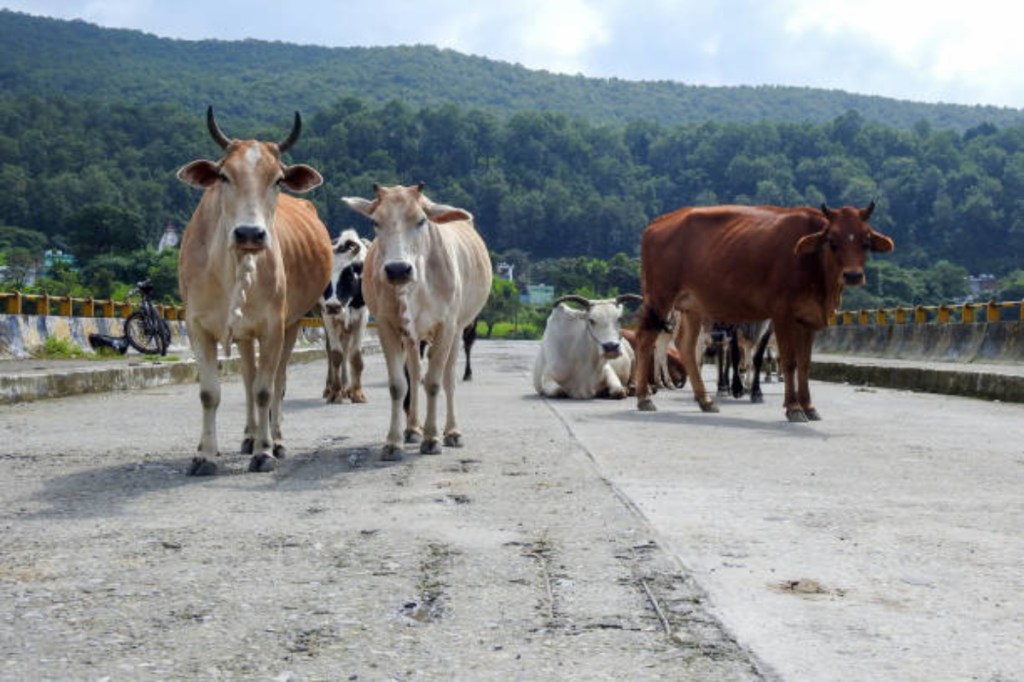
Diversion between Human and Nature
In today’s era, to ease everything, technology becomes key and with the fast transition of technology, the work which had been done by humans and animals in old centuries has been done by machines. Human labor might be suffering this period as of now, but it has a huge impression on animals as most of the farm-related work has been done by machines to save time and labor cost. The question is: do humans want everything to become too fast? Every day, the sun rises and sets at its own pace since life exists in the universe. Nature blooms slowly but steadily. Only humans are floating in the race to make everything speedy.
Generosity of Animals
Animals provide many benefits of daily needs to human beings like food, clothing, medicine, and other economic needs. Animals offer loyalty, companionship, unconditional love. In Spite of all humans being the most intelligent species among all spices, human beings forget his basic roots that signify humanity. Every species is a child of mother earth and every species has their own right to live peacefully and it’s necessary to balance the whole ecosystem. Other species like animals need infrastructure, too, for their survival. Stray Animals also need food, water, shelter and space to live life. Humans have no right to greed on nature and innocent animals for their own purpose. Humans must understand that alone he can not rise and sustain in the universe.
IS HUMAN SELFISHNESS RESULT OF STRAY CATTLES?
Homeless, shelter less, ownerless heirless are common terms we can notice when we talk about Stray Cattles. This is a man made problem. Humans become selfish with the rise in technology. Cows produce milk and Calves are snatched away from their mothers.:
There has been continuous change in Human beings psychology that:
1.cows are a milk machine for fulfilling their daily and monetary needs. For that exotic breeds have replaced maximum indigenous breeds within a span of time.
Agar baat karein purane dinoo ki?
It was also the time when there were positive, productive relationships and sacred bonds between humans and cattle. Fundamentals of caring and sharing were there. But with the increase of industrialization in farming and human needs, basic ethics like love, empathy, and sympathy have become less important nowadays. There can be lots of factors which are the cause of such matters.
2.Bovines are going through a painful process as Hormonal injections are given to increase milk production.
Iske karan ye bhi ho sakte hain ke?
Rise in population and to fulfil the needs of human beings artificial technologies are used; this may be due to changes in lifestyle of human beings. In older centuries every home had their own cattle to fulfil daily needs. Due to the innovation of different fields of work which affect the ratio of people exists in agriculture and dairy.
-By increasing the milk production quality of milk decreased and for their own benefits human beings giving sufferings and pain to other beings as in longer term artificial injections are not good for the health of cattle as well as humans who are drinking that milk.
-There is no more A2 milk due to hybridization of breeds. Cruelty-free milk does not exist. Ratio of indigenous cattle breeds is disappearing as for greediness to have more milk from exotic breeds, to have a indigenous cattle people neglect ingenious cattle.
-Researches show autism, schizophrenia, type 1 diabetes, heart disease and digestive problems more prone to people who are consuming A1 milk for a longer duration .
3.Most Bovines are exploited when they are no longer able to produce milk and sent to the meat or leather industry.
Jiske kya parinaam hue?
– leather industry’s claim of 0 percent impact for anything before tanning the hides. Greenhouse gas emissions in the leather process, barring those emitted on farms or grazing land.
Logon ki mansikhata kya rahe hoge?
-Plant-based alternatives can be used in place of leather. In reality now a days information is so huge that people don’t have time to indulge in deep and it’s difficult them to recognise which leather product made from which material(cows, pigs, goats, and sheep; exotic animals such as alligators, ostriches, and kangaroos; and even dogs and cats) so, empathetic people are not able to avoid purchasing of leather.
3. Calves are only a source of expense for them to feed and provide shelter. Bull calf work is replaced by tractors for farming.
Purane samay ki baat ..
–In ancient times regional fairs(locally called as Mella/Jatra/ Yatra ) used to be the centre point for bull trade (for farming). For land preparation Bullock played a pivotal role in fulfilling the manure requirement at the farm, good for the soil.
Impact of Stray cattles in Rural and Urban Areas:
1.Population of stray cattles is 5 Million in India and its rate is increasing. Every state has a different ratio. In rural areas its ratio is less as compared to urban areas.
-Land for cultivation of fodder is less in Urban areas. Due to lack of space and high cost of feed farmers abandon/stray their cattle on the streets of cities. To fulfil their food needs stray cattles find their way to graze on waste, garbage and tanks.
2. Stray cattles destroy the crops on the farmland by trespass and this causes annoyance to farmers.
Kya hum khud ko dusare ke sathaan pe rakh kar dekh payenge unka dard?
–In general if one thinks that like human beings, stray cattle also have their basic needs, that is food, water and shelter. Suppose assume that for single day human being left in a place where boundation of food, water and shelter than how can survival is possible? If this situation occurs and suppose animals throw stones and beat human beings for distortion of farm land then what would be the reaction of human beings at that time? Human beings might not be calm in that situation even in the same situation stray animals being generous for 1-2 times . After a certain state of tolerance power could be at its end and starry animals react by hitting peoples. So, what do human beings expect from them? why among intelligent species humans don’t want to understand that other beings of this nature are also important for the existence of ecosystems. Human beings become self centered.
Kyu chod detey hai loag stray cattle ko?-In Urban Areas there is lack of space due to high cost of feed and non availability of land for cultivation of fodder and grazing. It has caused farmers to abandon/stray their cattle on the streets of cities and that may cause traffic accidents as stray animals wander across the public roads.
Current management of Stray cattle in India:
Most of the states of India have some cow shelters (Gaushala) for Rehabilitation. These shelters were administered through public trusts, charitable societies(approx. 40%), public trusts(approx. 30%), private trust(approx. 10%) and(approx. 5%) rest by government, temple trusts and municipalities. Denotation by the public, trusts, business, and funding by the state governments provides the funding for the shelters. Most of the cow shelters (Gaushala) have a problem of expenditure which occurs more than their income.
Income sources of Gaushalas:
-Sales of milk, urine, vermicomposting(approx. 17%) and manure(approx. 37%) are the main source of income of cow shelters(Gaushala).
-Another alternative of income is dung generated fuel as biogas (approx. 19%) and cow urine is used as a biopesticide and traditional medicine. approx. 24% of the shelters collected urine to use as a biopesticide or in traditional medicine.
Current life of cattle in cow shelters (Gaushala)
Cow shelters established for the purpose of keeping, rearing ,breeding and maintaining cattle for the purpose of protection ,reception, and treatment of infirm, aged or diseased cattle.
-Due to lack of space in cow shelters, breeding of the cows is not manageable. Cow shelters are being used as rescue homes for managing the street cattle overpopulation that is difficult in managing the growing number of animals being admitted to the shelters.
-Medical care facilities needed to be improvised for old, sick and accidentally affected cattle. There is a need for veterinary dispensaries to provide doorstep service.
–Adequate space is needed for stray cattle for their shelter home.
Govt. steps to out to Tackle Stray cattle issue:
The union government has launched a pilot project to run a cow sanctuary in Uttar Pradesh’s Muzaffarnagar to tackle the growing menace of stray cattle.
1.The Rashtriya Gokul Mission (RGM)
This scheme is related to development and conservation of indigenous bovine breeds.
-To meet growing demand for milk it emphasises enhancing milk production and productivity of bovines.
-For breeding purposes it propagates use of high genetic merit bulls.
– Artificial insemination coverage and delivery of Artificial insemination services at farmers doorstep.
-To promote conservation of rearing indigenous cattle & buffalo in a scientific and holistic manner.
Funding Pattern of the Rastriya Gokul Mission (RGM)
Scheme will be implemented on 100% grant-in-aid basis except the following components : i) Accelerated breed improvement program under the component subsidy as GoI share of Rs 5000 per IVF pregnancy will be made available to participating farmers.
ii) Up to 50% of the cost of sex sorted semen will be made available to participating farmers to promote sex sorted semen under the component subsidy.
iii) Under the component subsidy up to 50% of the capital cost maximum up to Rs.2.00 crore of the project for establishment of breed multiplication farm will be made available to entrepreneurs.
This scheme have different components like Bull Production Programme(Progeny Testing, Pedigree Selection, Genomic Selection, Import of Germplasm), Support to semen stations, Implementation of IVF Technology, Breed Multiplication Farms, Extension of Artificial Insemination Network (Establishment of MAITRIs, Nationwide AI programme, Using sex sorted semen for getting assured pregnancy, Implementation of National Digital Livestock Mission (Livestack)).
2.Gujarat Mukhya Mantri Gau Poshan Yojana:
This yojana provides financial assistance of Rs 30 per cattle to registered trusts in the state under the Mukhyamantri Gau mata Poshan Yojana. For the operations and maintenance of Gaushalas and Panjarapoles. Rs. 500 crores has been made for the provision of Mukhyamantri Gau Mata Poshan Yojana. For special activities, provision of Rs. 100 crores has been made in urban and rural areas to resolve the problem of stray animals.
Current solutions which can over come issue of stray cattle:
- Emphasis should be given on indigenous breeding rather than cross breeding of exotic varieties as Indian breeds have an advantage over the exotic ones as they naturally produce A2 quality of milk that is beneficial to humans. The indigenous cow milk also has high levels of some useful components like conjugated linoleic acid, omega-3 fatty acids. There are a lot of useful bacteria in the dung of indigenous cows that can prevent diseases caused by pathogenic strains and can be used as a natural purifier.
- Research to design agricultural tools / implements that can be used with draft animals. Cattle are also used as draft animals beside milk.
- Focus on developing sexed semen of indigenous breeds to control the population of male calves that have lower demand.
- Cow dung can be used as probiotics because it is a rich source of microflora.
- Crossbred varieties are used as foster mothers to produce pure indigenous cows through embryo transfer technology is another approach that could be reverse crossbreeding.
- Cow urine (of indigenous varieties) can be used as a natural biopesticide, yield enhancer and soil rejuvenator, besides curing diseases, controlling mosquitoes, disinfection and fish food.
- Researchers should closely study milk types from the indigenous breeds to understand their merits. This would raise the utility of the non-descript breeds.
- The dung of indigenous cattle, has a lot of useful bacteria that can prevent diseases caused by pathogenic strains and can be used as a natural purifier (Sharma and Singh 2015)
- It added that cow dung is a rich source of microflora which can be used as probiotics. (Mandavgane and Kulkarni 2018)
- Cow urine (of indigenous varieties) can be utilised in agriculture as bio-pesticide, yield enhancer and soil rejuvenator,besidescuring diseases,controlling mosquitoes, disinfection and fish food.
- Cow dung is used in energy production via fermentation and gasification processes. The cow dung ash has been used in construction as a partial replacement of conventional material and as an adsorbent.
- Cow milk, curd, ghee, urine and dung are also used in making panchgavya, which provides immunity.
For more information and better project plans to overcome this issue , email me on thco0002@gmail.com and subscribe to my blog for more updates..


Leave a Reply